



Terme dans les jardins du château de Versailles
Category
PaintingTechnique
Oil on canvasPeriod
Beginning of the 20th centuryDimensions
158.8 cm x 54.6 cm How does it work to buy on Art Shortlist ?
 Receive a price evolution alert
 Benefit from a delivery service
 I want to ask a question
Make an offer of
Artwork information
Category
PaintingTechnique
Oil on canvasPeriod
Beginning of the 20th centuryDimensions
158.8 cm x 54.6 cmSignature
UnsignedProof(s) of authenticity
The authenticity of this work has been confirmed by the Association des Amis de Paul-César Helleu, and it is included in the Digital Catalogue Raisonné of Paul-César Helleu under reference APCH HU3-1137.State of conservation
GoodFraming
YesLocation
Paris, FranceDescription
Paul-César Helleu (1859–1927)
Term Figure in the Gardens of the Château de Versailles
Oil on canvas, 158.8 × 54.6 cm (62.5 × 21.5 in)
Work included in the Digital Catalogue Raisonné of Paul-César Helleu under reference APCH HU3-1137.
This large oil on canvas, of a rare and striking format, depicts a female term in the gardens of the Château de Versailles, probably located in the Petit Parc among the bosquets that Paul-César Helleu was particularly fond of.
Painted en plein air, in keeping with Helleu’s practice of setting up his telescopic easel directly in the royal alleys, the work reflects his profoundly modern vision of landscape. Here, the statue rises with an almost solemn verticality, surrounded by dense, shimmering foliage rendered in a perfectly controlled range of silvery greens and blue-greys.
The broad, free, almost musical brushwork conveys Helleu’s impressionist manner when he turns to Versailles: rather than seeking sculptural precision, he captures the luminous vibration that envelops the marble. The term seems to emerge from nature itself, as if absorbed and then revealed by it—an effect that only the most sensitive impressionist painters have managed to achieve with such subtlety.
The springtime atmosphere, recognizable in the green leaves and clear light, lends the scene a rare poetic quality, quite different from Helleu’s better-known autumnal views. It stands as a precious testimony to the intimate relationship the artist maintained with Versailles, a central theme in his painted œuvre.
The painting is presented in a beautiful silvered wooden frame, perfectly attuned to the cool, elegant harmony of the composition.
Historical and artistic context
At Versailles, Helleu found a unique field of experimentation: statues, bosquets, parterres and shifting light effects became a true pictorial laboratory. As the literature on his Versailles views underlines, Helleu sought less to describe reality than to harmonise the play of light on marble, water and vegetation, creating works of incomparable elegance.
The year 2025 marks a major turning point in the institutional rediscovery of the artist:
the reopening of the Musée Bonnat-Helleu in Bayonne, which now houses the most important collection of Helleu’s works in the world, following the bequest made by his daughter Paulette Howard-Johnston to the city of Bayonne. This renewed visibility is fuelling a growing interest in Helleu’s paintings.
A major painting, rare in its format, provenance and subject
Through its scale, fresh chromatic range, Versailles subject and prestigious history, this oil on canvas stands as a work of the highest order within Paul-César Helleu’s production.
Views of statues at Versailles are particularly sought after and very seldom appear on the market, especially in such imposing formats.
Provenance
- Collection Gaston Palewski (Gaston Palewski, 1901–1984)
A prominent French statesman, close collaborator of General de Gaulle, minister and ambassador, but also a passionate art collector. His eye was particularly renowned for late 19th- and early 20th-century French painting. Works coming from his collection are considered to be of very high quality and are much sought after.
- Sotheby’s sale, Paris, 19 June 2007, lot 214
Acquired at this sale by an American collector.
Bibliography
Sotheby’s, Sale Catalogue, Paris, 19 June 2007, p. 173, lot 214
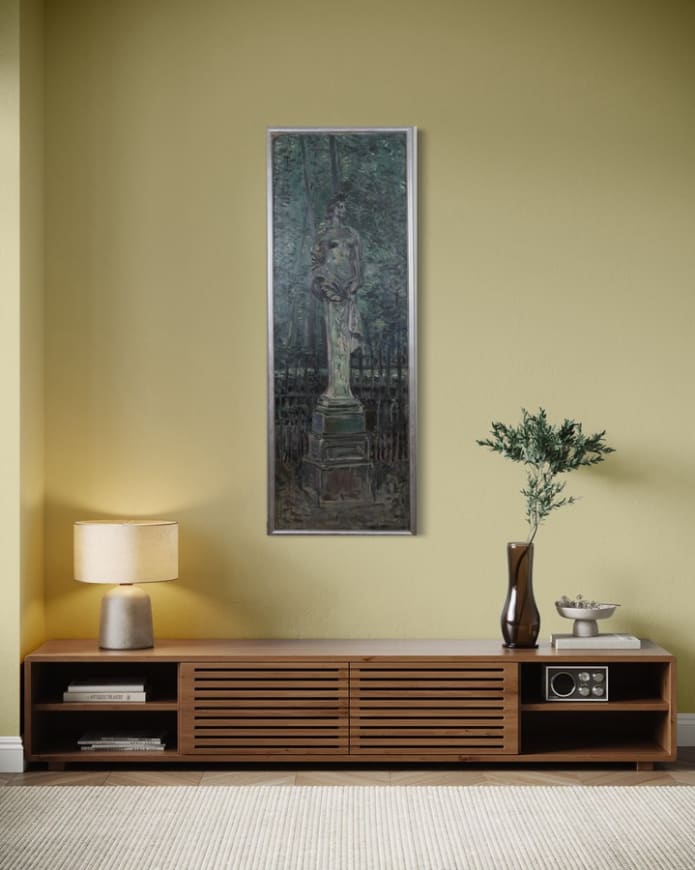
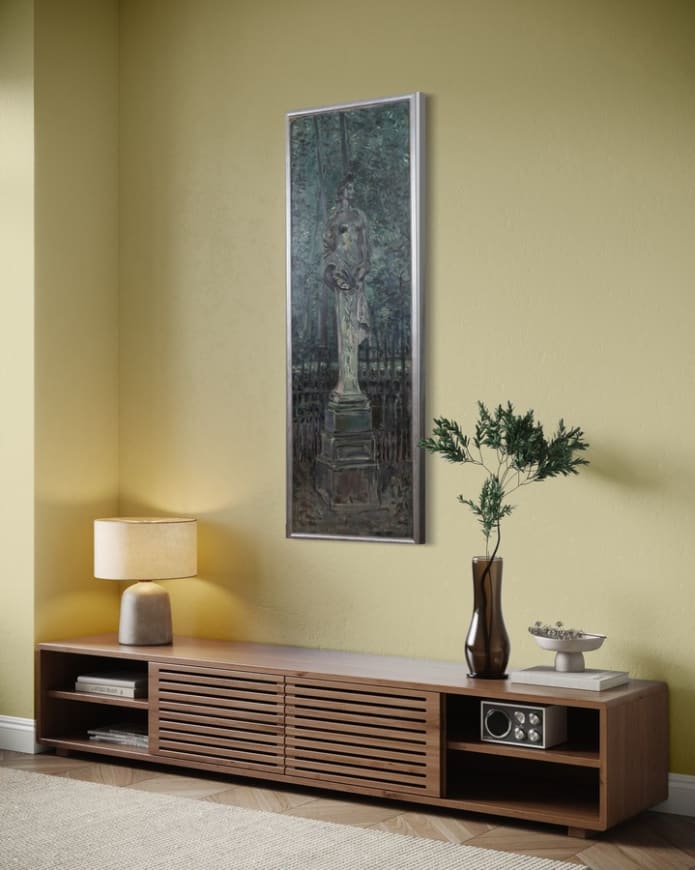
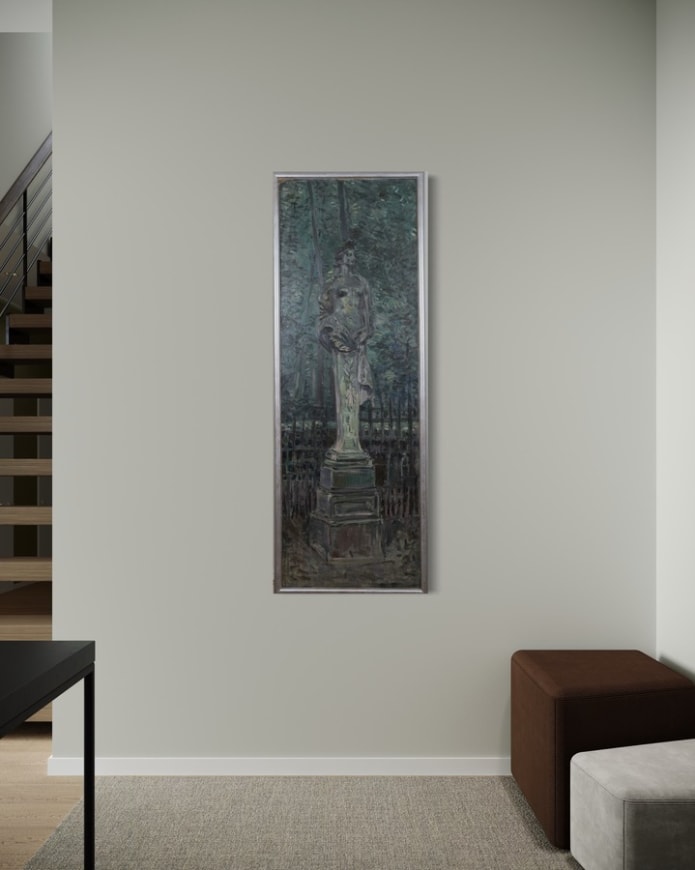
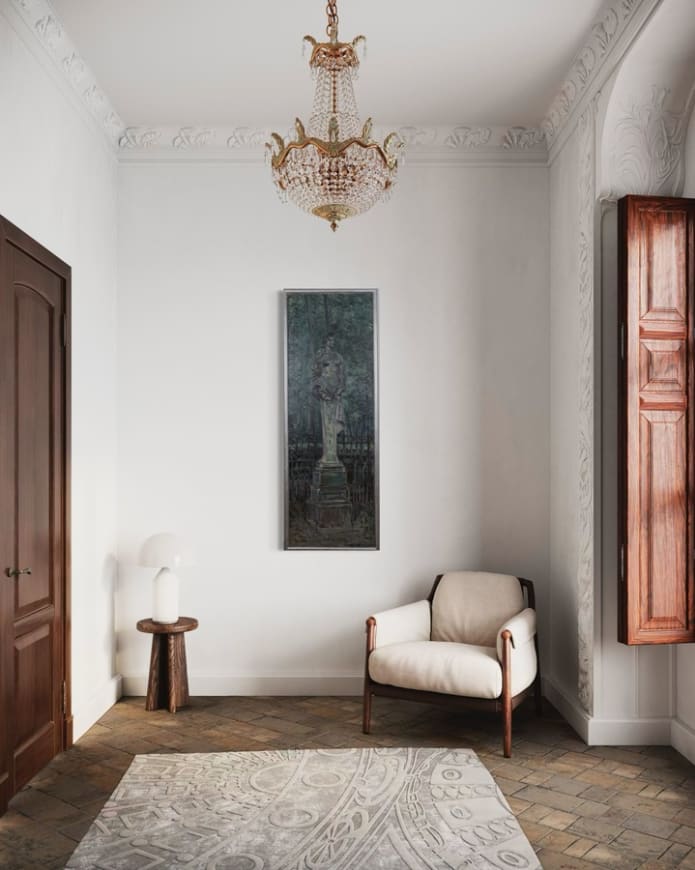
Imagine the artwork at home


The artist

Bio
Paul-César Helleu's name evokes an era, and particularly a society from the end of the 19th century to the last years before the First World War in Europe, which Marcel Proust described so admirably in his works.
Delicacy, taste and his very personal talent as a draughtsman have largely contributed to the extraordinary success of this artist. His celebrity is based on the virtuoso representation of beautiful women from the great Parisian milieu, but also from the international society dominated by Anglo-Saxon elegance.
Today, the history of painting sums him up in representations that limit his talent too much to the fashion of a time, without taking into account a whole part of his artistic production devoted to the painting of nature, sea landscapes in particular, where refinement is in tune with the sensitive accents of a true artist.
Helleu was born in Vannes in 1859. On the death of his father, a customs inspector, he was sent to Paris to the Lycée Chaptal. In 1876, he was admitted to the École des Beaux-Arts de Paris in Jean-Léon Gérôme's studio, but it was mainly outdoor painters who attracted him. He became friends with Whistler and Sargent, then with Monet, whom he met at Durand-Ruel's during the second Impressionist Exhibition.
In order to survive, Helleu works for the ceramist Deck for whom he executes plate decorations. It was on this occasion that he met Giovanni Boldini, with whom he would share a very long friendship.
With Jacques-Émile Blanche, he shares a passionate taste for England since a trip to London in 1885. That same year, he tried his hand at engraving with a diamond point offered by James Tissot.
In 1884, Madame Guérin commissioned him to paint a portrait of her daughter Alice, then aged 14. He fell madly in love with her and married her two years later. The pastel, created for this occasion, as well as La Gare Saint-Lazare were presented at the 1885 Salon.
In 1886, having already been noticed in several exhibitions, he and his friend Monet refused to take part in the 8th Impressionist Exhibition despite Degas's requests. This is no doubt the reason why he was never part of the Impressionist movement, nor was he recognised as such. The following year, Robert de Montesquiou bought a lot of six engravings from him. From this meeting a deep friendship was born with the collector who put him in touch with his cousin, Countess Greffuhle. From that moment on, the artist entered Parisian society and became the fashionable portrait painter.
In 1893, Helleu began a series of stained-glass windows of cathedrals and, the following year, he changed his theme and lingered on the park of Versailles.
In 1897, he exhibited his paintings of Versailles and his seascapes at the Salon du Champ de Mars.
The artist was an innovator who attracted the admiration and curiosity of his contemporaries. In 1889, contrary to the pronounced taste of the time for dark interiors, he had the walls of his flat at 68 Bld Pereire painted white, followed by those of 45 rue Émile Ménier.
Helleu was soon in demand everywhere: he exhibited in London in 1895, where the exhibition catalogue, with a preface by Edmond de Goncourt, established his reputation. He then met Marcel Proust who was introduced to him by Montesquiou and began a deep relationship with him that would inspire the author to write the character of the painter Elstir in A la Recherche du Temps Perdu. Helleu engraved the portrait of Marcel Proust on his deathbed.
Like Elstir, Helleu is passionate about the sea. To the pleasure of the yachtsman, who spends most of his time on superb boats - he will own four of them - the painter discovers new sources of inspiration as much in the women's toilets as in his visions of the water and the sky, sometimes veiled, sometimes bluish.
The Helleu style, which characterises elegance or refinement and feminine grace, was a huge success in Paris, London and New York, where he travelled from 1902 onwards. He had great success in the United States with his portraits of elegant women and, in 1912, he was commissioned to paint the ceiling of the Hall of the Grand Central Station in New York with the theme of the signs of the zodiac: he composed a starry vault, crossed by a zodiac with gold signs and a silver milky way.
Helleu died in 1927, following an operation while he was planning a major exhibition of his paintings with Forain.
Les Amis de Paul-César Helleu, an association founded in 2001 by Paulette Howard-Johnston, the artist's daughter, has as its mission the protection, diffusion and promotion of the work of Paul-César Helleu. In 2020, thanks to a collective work carried out over several generations, Les Amis de Paul-César Helleu published the artist's digital catalog raisonné.
"The graceful Helleu painted in an unknown colour between delight and blue." Stéphane Mallarmé
Other artworks by Paul-César Helleu
See all artworks by Paul-César Helleu


You may also like
See all artworks


 Ludovic Thiriez





.jpg)
.jpg)














 Delivery Service