5 min
5 minIn March 2021, Christie’s sold a digital artwork by Beeple for $69.3 million. Overnight, a wild idea spread across the globe: art had entered a new era.
A JPEG suddenly became a masterpiece, the blockchain became a certificate, and an entire generation discovered a market that promised to reinvent the very notion of value.
Media outlets, celebrities, investors, auction houses, start-ups — everyone seemed to believe in it. But today, the numbers speak for themselves.
NFTs are worth very little, platforms have emptied out, and projects once hailed as "revolutionary" now lie dormant in a digital graveyard.
So, what really happened? Why did this collective mirage grow to such proportions? And what remains today of that wave that claimed it would change the history of art?
Art Shortlist takes a closer look at a phenomenon as explosive as it was fragile. The story of an unprecedented crash.

1 - 2021: the birth of a global hype
The explosion begins with Beeple’s sale. Christie’s — a symbol of the traditional art market — opens the door to a new world.
Instantly, everything accelerates: thousands of NFT collections appear, dedicated platforms surge, the media raves, and markets go into overdrive.
Celebrities fuel the frenzy as well. Snoop Dogg presents himself as a major collector. Neymar buys NFTs at staggering prices. Paris Hilton joins the movement too, convinced that NFTs represent the future of art.
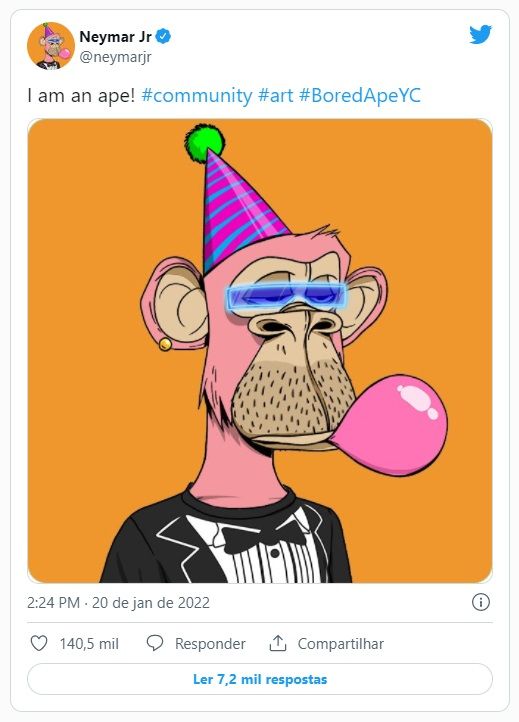
A tweet from Neymar in January 2022
The art market — usually cautious and conservative — follows suit. Auction houses begin organizing special NFT sales. NFT galleries open everywhere. In the metaverse, "digital museums" start popping up.
And suddenly, no one is talking about art anymore. Not about creation. Not about aesthetics. People talk about money. About easy gains. About charts going vertical. About a "revolution" that nobody wants to miss.
The promises are there. The storytelling is flawless. The frenzy is total.
2 - The grand promise: transparency, rarity, revolution
Behind the hype, the blockchain seemed finally capable of solving the art market’s number-one problem: provenance.
NFTs promised: a tamper-proof digital certificate, a complete, lifelong history of the artwork, total transparency on ownership, automatic royalties for artists.
A technological utopia, perfectly aligned with the spirit of the moment: the blockchain was supposed to fix an opaque market.
Kevin McCoy, one of the pioneers of NFT technology, summed it up in 2014: "We needed a way to ensure that a digital file could be rare and unique."
On paper, it was hard not to be seduced. In reality? It was a completely different story.
3 - The reality: pure speculation and the absence of art
Very quickly, NFTs stopped being a tool. They became a speculative token. Thousands of soulless collections flooded the market. Images generated in bulk. Copy-paste projects everywhere.
Extravagant promises spread: "buy now", "you’ll get rich", "don’t miss the next big one".
Artistic logic vanished; casino logic took over.
The numbers are staggering: 2021: $24.7 billion - 2022: $12.6 billion - 2023: $1.6 billion (Source: DappRadar)
A 93.5% collapse of the global NFT market in just two years. Public interest evaporated just as fast.
Symbolically, the case of Jack Dorsey’s first tweet became iconic: bought for $2.9 million, resold for $14,000 one year later.
NFT museums shut down. NFT galleries close their doors. Virtual exhibitions are deserted. The bubble had already burst.
4 - The crash: when the hype turned into a fiasco
Bored Ape Yacht Club — one of the most famous NFT collections — lost more than 80% of its value.
OpenSea, which once controlled nearly 90% of the entire market, laid off 50% of its staff in 2023.
The once-hysterical forums emptied out. Discord servers grew silent. Promises collapsed, and illusions evaporated.
And then the justice system stepped in. The SEC went after several celebrities: Lindsay Lohan, Soulja Boy, Ne-Yo, Akon, Jake Paul. Logan Paul faced a class-action lawsuit over the CryptoZoo scandal.
The bubble wasn’t just artistic or financial. It was a cultural, psychological — almost anthropological — phenomenon. And like all bubbles, it burst at the very moment it seemed invincible.
5 - What remains: the tool, not the hype
NFTs, as a "market", failed. But not everything deserves to be thrown away. The blockchain still holds real promise for artwork traceability.
Imagine a world where: every artwork receives a tamper-proof digital certificate, every resale adds a new owner to the chain, the entire life of the artwork remains visible and transparent, forgeries become far harder to circulate.
It’s not a revolution. It’s not art. But it is a technical tool that — if used properly — could strengthen trust in a market that often lacks it.
Conclusion
NFTs didn’t fail because they were digital. They failed because they were empty. In 99% of cases, an NFT isn’t an artwork. What remains from this era isn’t the hype or the millions.
It’s a lesson: art cannot be replaced, duplicated, or invented out of thin air. Technology can assist — but it cannot create artistic value. It cannot replace it.
Art isn’t something you automate. It must come from the heart, carry an inner life, and have a soul to move people.